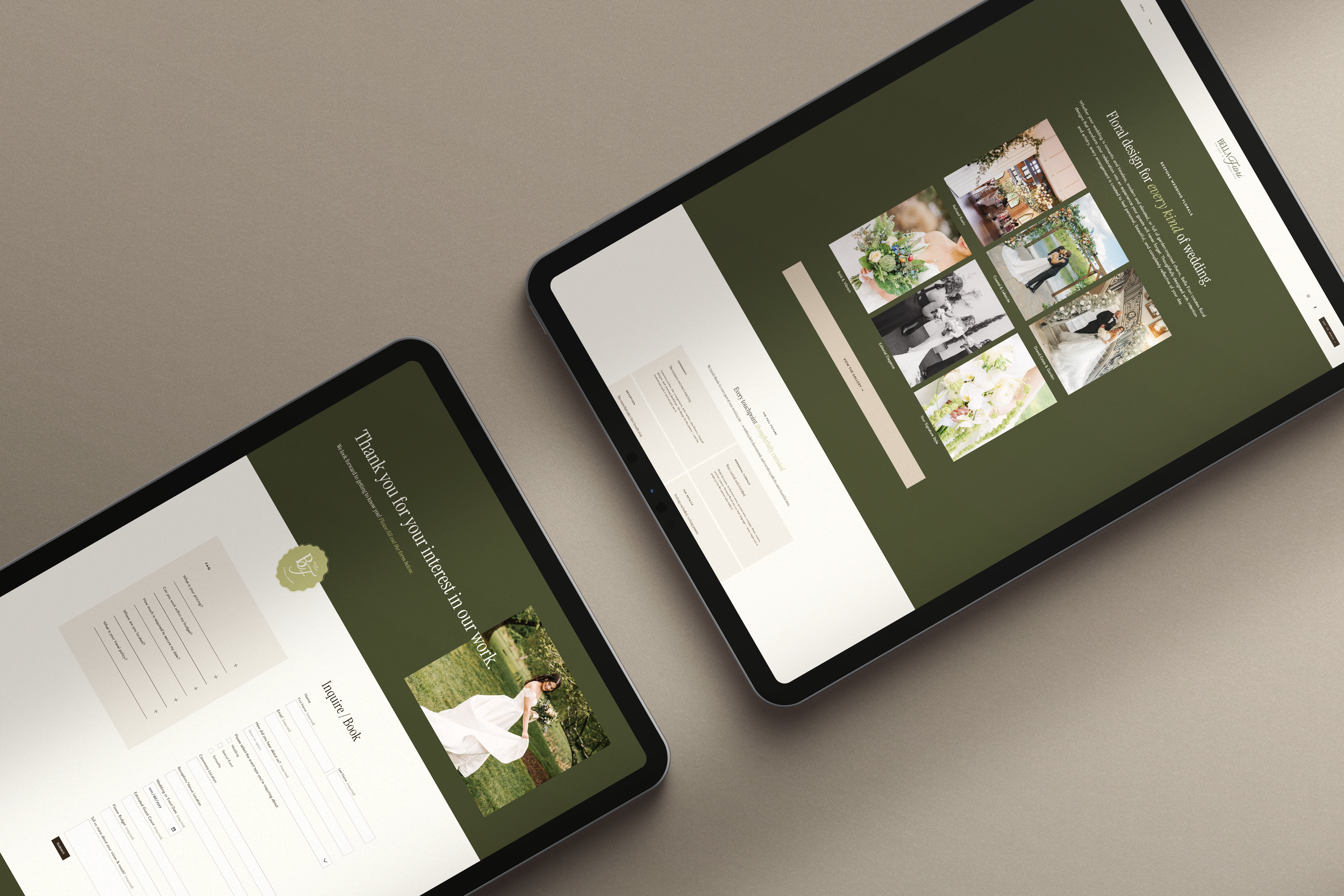
Why You Need A Website More Than Ever (Yes, Even With Social Media)
If you've been telling yourself that your social media is enough and you don't need a website, it's time to rethink that.
Let me start by saying I completely hear you. As the former Director of Marketing for multiple wedding venues from 2014-2024, I oversaw the social media, and I saw the shift firsthand — how it blew up, and how couples started making real booking decisions based on what they saw on social. Social media is one of the best things to happen to vendors in the wedding industry for exposure and getting your work seen, 100%.
But it was never meant to be your home base, and that gap is only getting bigger in 2026.
AI Search Is Growing Like Crazy — and It Runs on Websites
I'm personally so tired of hearing and talking about AI, but I also know how important it is in business, so I'm sticking with the facts.
We all know where search is headed. More and more, instead of typing into Google or scrolling through a vendor directory, people are asking ChatGPT. And that trend definitely isn't reversing — attention spans are only getting shorter. I have a Gen Alpha kid, and let me tell you, their attention spans make Gen Z look patient. They are not scrolling for answers. They want the answer yesterday.
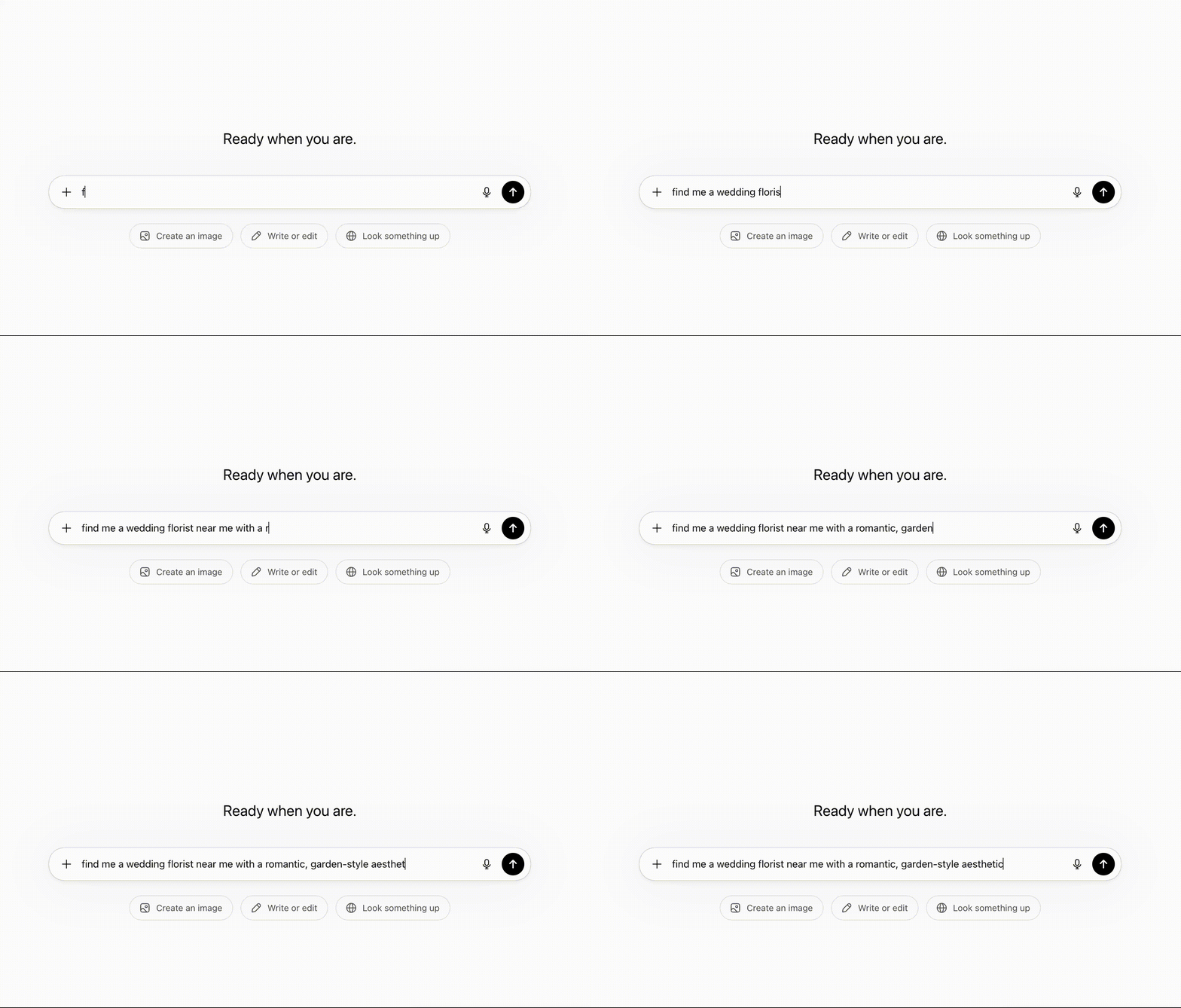
So people are now asking ChatGPT, Claude, or another AI assistant a direct question: "find me a wedding florist near me with a romantic, garden-style aesthetic."
Here's the question worth sitting with: where is that AI getting its information from?
Not Instagram. Websites.
AI Tools Are Reading Websites, Not Social Media
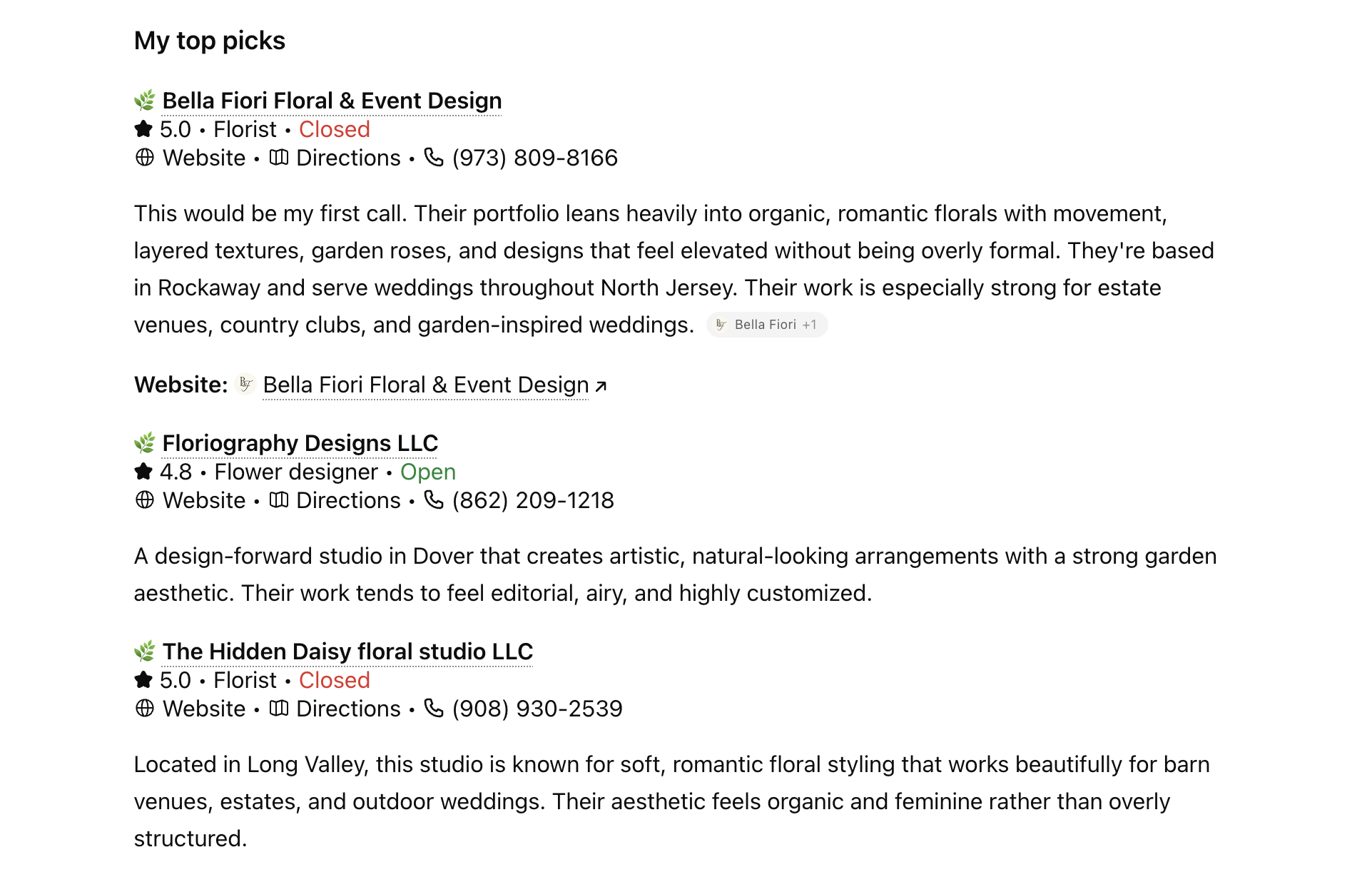
AI tools pull information from websites, business listings, reviews, directories, and other publicly available sources to understand who you are, what you do, your style, your service area, and more. Your website is often the most complete source of that information.
Meanwhile, that beautiful portfolio from your last six weddings, sitting in your Instagram grid from months ago? Unfortunately, to an AI search tool, it might as well not exist.
Once You're on the List, Design Is What Makes the Connection
Let's say it works — the AI recommends you alongside two other florists. Now what?
The person on the other end isn't reading three full "About" pages and comparing your mission statements line by line. Nobody has time for that — see above, re: attention spans. They're opening three tabs, glancing at each site for a few seconds, and going with their gut.
That gut reaction is entirely about vibe. Your colors, your fonts, your photography, your layout — all of it is communicating who you are before a single word gets read. If your site feels outdated, cluttered, or generic, it doesn't matter how good your work actually is. You've already lost that comparison, often without the person even realizing they made a decision.
This is where branding and design stop being "nice to have" and become part of your marketing strategy. A site that's cohesive, intentional, and unmistakably you helps your dream client feel an instant connection — the kind that makes them stop scrolling and reach out, instead of clicking back to compare the next option.
A Website Helps Turn Interest Into Inquiries
Social media is great for discovery, but websites are built for decision-making.
When someone's considering reaching out, they're usually looking for more than beautiful photos. They want to know what you offer, whether you're available in their area, what working with you looks like, and how to take the next step.
A website gives potential clients a clear path forward. Instead of digging through Instagram highlights, scrolling old posts, or sending a DM with basic questions, they can quickly find the information they're looking for and decide whether you're the right fit.
The easier you make that process, the more likely someone is to reach out.
Social Media Is Rented Space
Everything you post lives on someone else's platform. They control the algorithm, decide who sees what, and if your account ever gets glitchy or restricted (it happens more often than people think), all of that work can disappear overnight.
And it's not just about getting banned or restricted. Platforms themselves come and go with trends. Remember when everyone was on Vine? Or building entire strategies around Facebook groups? You truly never know which app is going to be the next one to lose relevance, get bought out, or just quietly fade away — not to mention the very real risk of getting hacked. If your entire presence lives there, your business is at the mercy of decisions you have zero control over.
A website is yours. No algorithm decides whether someone sees your portfolio or your pricing page, and no platform shutdown takes it down with it.
It Also Builds Trust
When someone's planning a wedding, they're doing serious research on every vendor they're considering. A polished website with your work, your story, and your process signals an established, professional business. A link-in-bio page with a DM button doesn't carry the same weight — and it's invisible to AI search entirely.
The Bottom Line
Social media is still valuable for connection and visibility — keep showing up there. But if you want to actually be found, especially as AI becomes a bigger part of how people search, you need a website doing the work in the background. And once you're found, your design and branding are what make someone choose you over the other two options on their screen.
The vendors who get both pieces right — visibility and vibe — will be easier to find, easier to trust, and easier to book as the industry continues to evolve.
If you're only investing in one thing, make it the one that keeps working — and keeps connecting — even when you're not actively posting.
If you're ready to build that home base — one that's strategic, on-brand, and built to actually get you found — that’s what I do at Studio Soirée.
Browse custom website design packages for wedding pros here.